A salt-air care schedule for coastal security screens
Salt is the main thing that shortens the life of screens on the Gold Coast. Ten minutes with a hose and a soft brush, done on a schedule, keeps mesh and frames looking new and keeps your warranty in good standing.

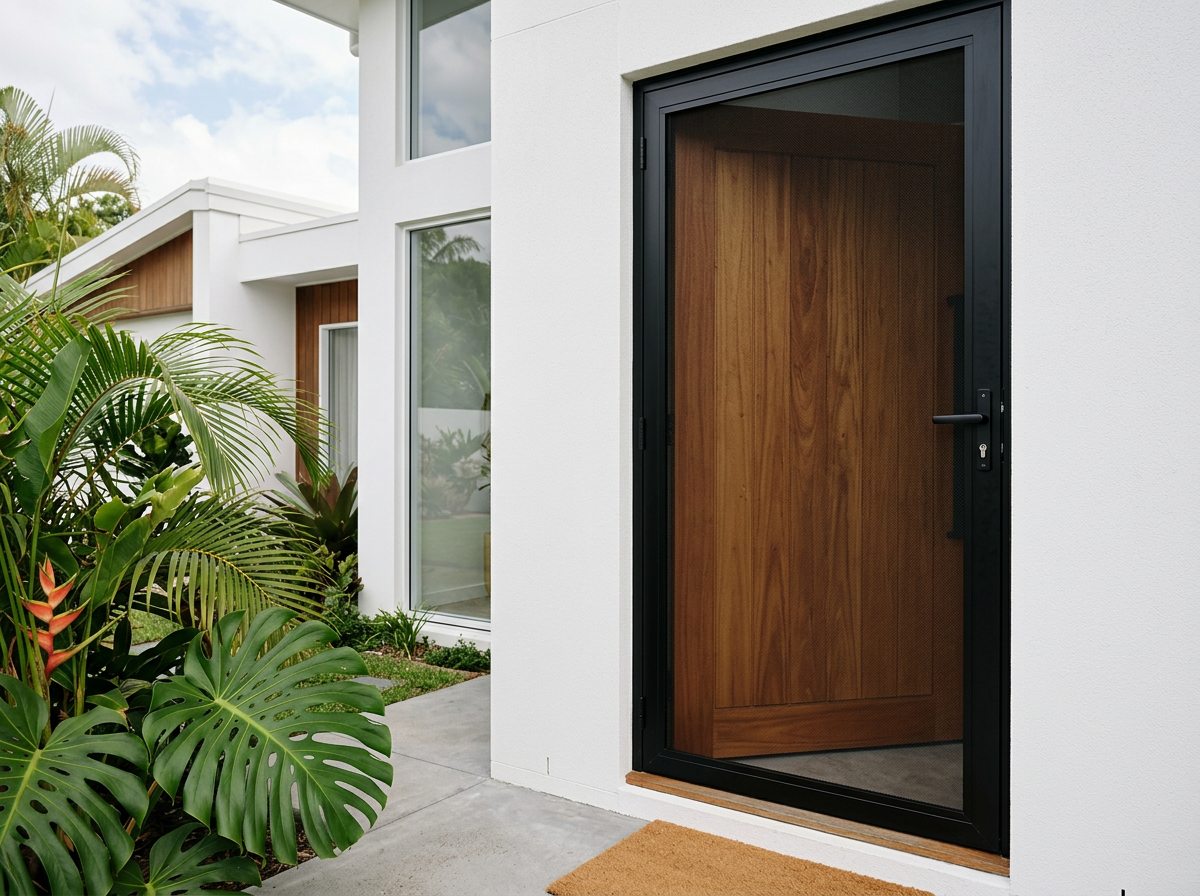
A canal-front home on Hope Island. Screens this close to the water do best with a fresh-water rinse every four weeks.
On this page
Key takeaways
Within a few kilometres of the beach, the Broadwater or the canals, rinse screens and frames with fresh water every four to six weeks. Inland, every two to three months is enough.
Use a hose, a soft brush and a little mild soap. Never use a pressure washer, harsh chemicals or abrasive pads.
Light brown tea staining on stainless mesh is a surface mark, not rust eating through. Caught early, it cleans off.
Most coastal warranties ask for regular cleaning. Keep a simple note of when you do it.
Why salt air matters
Sea spray carries fine salt inland on the wind, and on the Gold Coast it reaches further than most people expect, particularly around Hope Island, Sanctuary Cove and anywhere near the Broadwater, the canals or the beach. The salt settles on mesh, frames and hardware, draws in moisture and, if it is left there, slowly attacks finishes and metals.
316 marine-grade stainless mesh and a quality powder coat are made to cope with this, but they are not maintenance free. Rinsing the salt off before it builds up is what keeps them performing for the life of the warranty.
See the Hope Island canal-front projectThe schedule
How often you clean depends on how close you are to salt water. Use this as a starting point.
Where you live
Rinse mesh and frames
Locks, tracks and rollers
On the water: canal, Broadwater or beachfront
Every four weeks, and after storms
Clean and check every three months
Within a few kilometres of the coast
Every four to six weeks
Clean and check every six months
Inland
Every two to three months
Clean and check once a year
If your screens face the breeze off the water, or sit under deep eaves where rain never reaches them, lean towards the more frequent end. Rain washes some salt off exposed screens, while sheltered screens get no help at all.
How to clean them in ten minutes
Step by step
Rinse
Hose the mesh and frame from top to bottom with fresh water at normal tap pressure.
Wash
With a soft brush and a bucket of water with a little mild, pH-neutral detergent, wash the mesh, frame and sill.
Rinse again
Rinse off all the soap, including the corners and the bottom rail, where water and salt collect.
Tracks
Vacuum or brush the grit out of sliding door tracks, then wipe them with a damp cloth.
Locks and hinges
Every few months, a light spray of dry silicone lubricant. Avoid oil, which holds grit.
What not to use
Do not use a pressure washer, which can push mesh out of shape and force water into the locks. Avoid bleach, pool chlorine, solvents and abrasive pads or steel wool. They damage powder coat, and steel wool can leave tiny particles on stainless mesh that rust and stain it.
Tea staining, scratches and when to call us
Tea staining is a light brown discolouration that can appear on stainless steel in coastal air. It is a surface mark, usually caused by salt and grime left sitting on the metal, and it is not the same as rust eating through the mesh. Regular rinsing prevents most of it. If it does appear, a cleaner made for stainless steel, used with a soft cloth, will usually remove it.
Check the powder coat while you clean. A small chip or a deep scratch can let salt in under the coating, so touch it up early. Call us if you see white, powdery corrosion spreading from an edge, mesh pulling away from the frame, a lock that stays stiff after cleaning or a door that no longer closes cleanly.
Repairs and servicing
Need a hand with an older screen?
We service locks, rollers and closers, re-mesh tired screens and repair other brands. Re-meshing an existing screen is typically $140 to $320.
See repairs and servicingCare and your warranty
Our screens carry a 10 year warranty on mesh and frames and 5 years on locks and hardware. Like most coastal warranties, it asks for regular cleaning, because salt left on a screen for months will damage any product. A reminder on your phone and a note each time you rinse is all the record most people need.
If you ever book a service or make a claim, we will ask roughly how often the screens have been cleaned, so a simple record makes that conversation quick and easy.
Read the full care and maintenance guideQuestions
Is tap water fine, or do I need anything special?
Water from the garden hose is all you need. The point is to dissolve the salt and wash it away.
Do screens on the side away from the water need cleaning too?
Yes, though they can go a little longer between rinses. Salt travels on the wind and settles on every side of the house, and sheltered screens get less help from rain.
Do screens near a pool need extra care?
Yes. Splashed pool water, from salt and chlorine pools alike, leaves a residue on mesh and frames. Rinse screens beside the pool with fresh water as often as you would on the water.
Is 304 stainless fine near the coast?
Near the water, 316 marine grade is the safer choice because it resists pitting from salt better. Further inland, 304 can perform well with regular cleaning.
MH
About the author
Mitch Harlow
Founder and lead installer, Secure Blinds & Screens
Has fitted and serviced screens on canal and Broadwater homes since 2004, and walks every coastal customer through the care routine on install day.
More guides from this authorRelated services.
The pages that go deeper on the products in this guide, with options, specifications and recent projects.
Keep reading.
More plain-English guides to choosing and looking after security screens on the Gold Coast.
All advice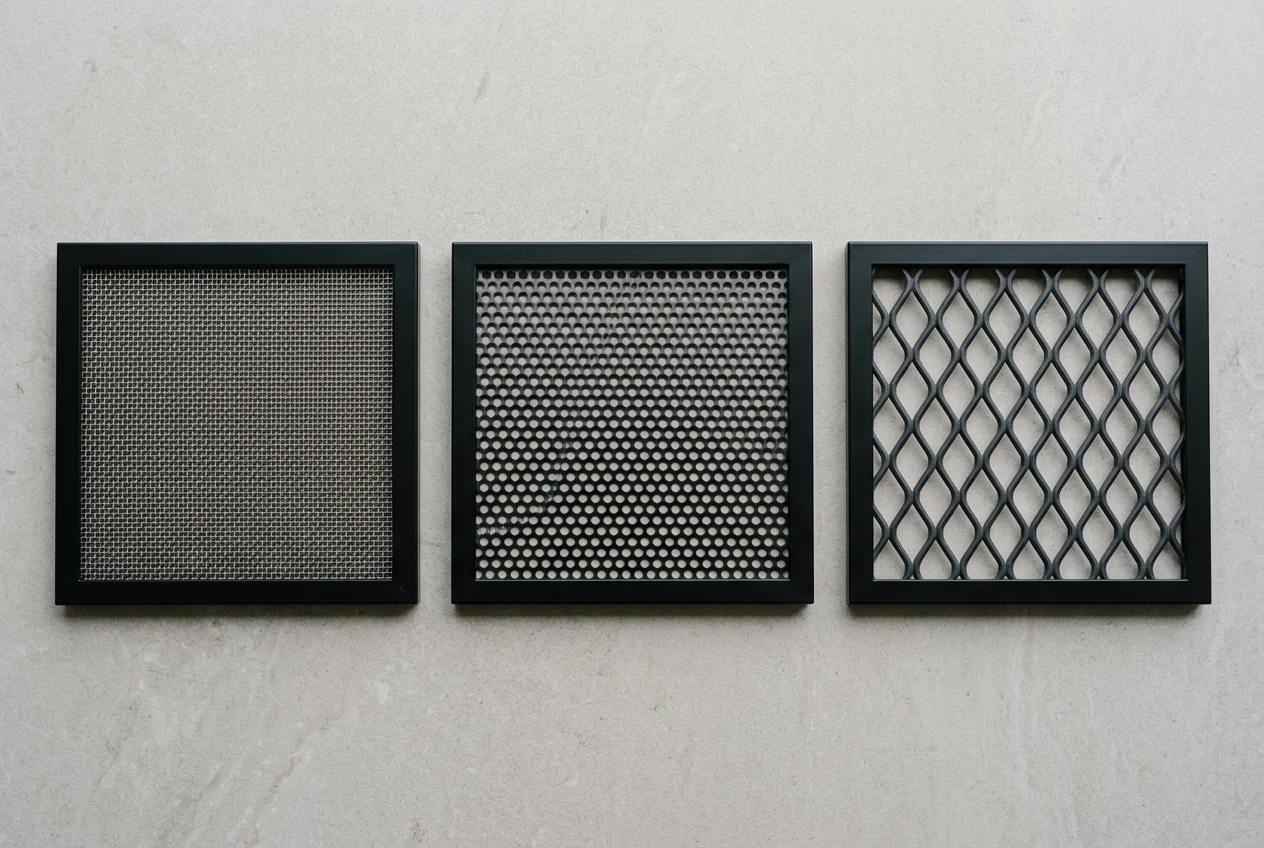

Living close to the water?
Book a free measure. We bring 316 stainless and powder-coat samples, check each opening and send a written quote within two business days.
Book a free measureNo obligation · Free measure from Ormeau to Southport