Zip track blinds in Gold Coast wind: what to expect
Zip track blinds hold up to wind far better than loose outdoor blinds, but no blind is storm-proof. Here is how they work, what a wind rating really means and how to look after them through storm season.
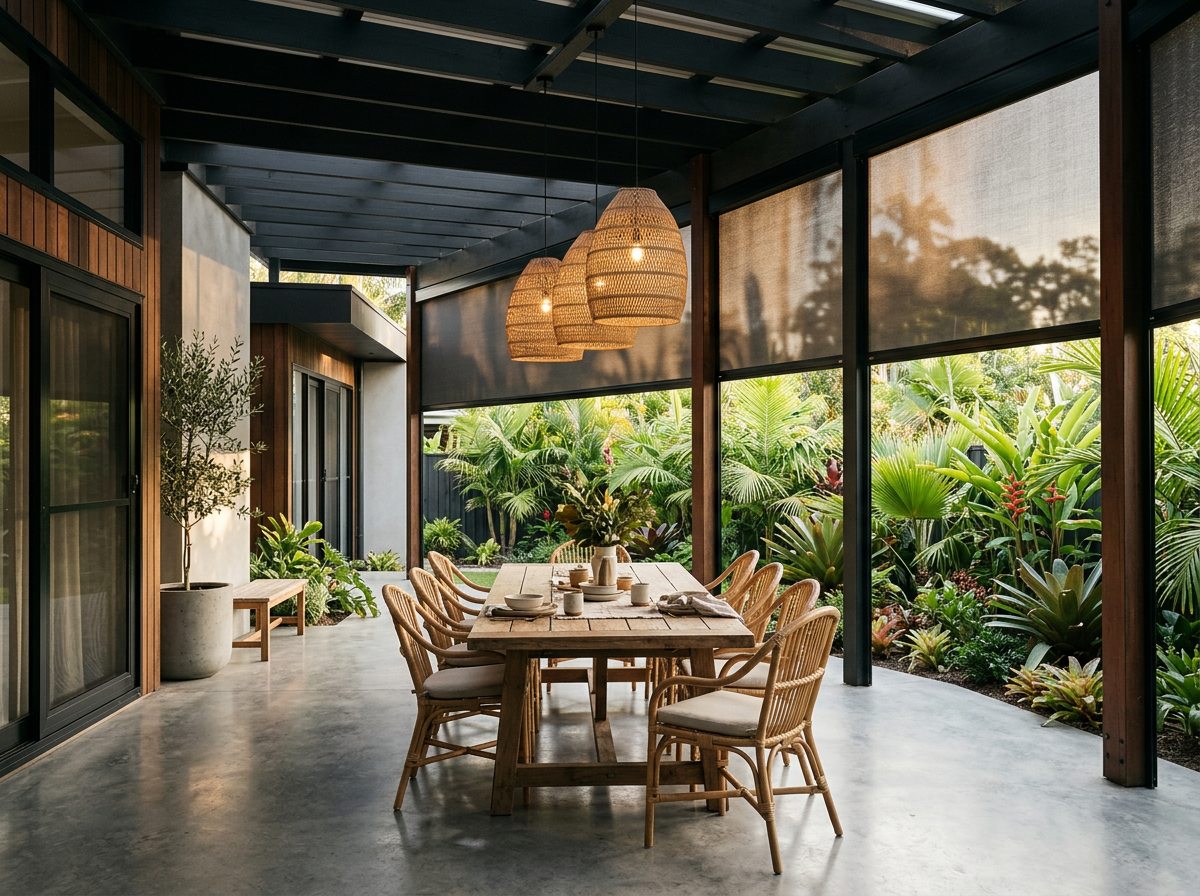
Charcoal zip track blinds on a covered alfresco, fully lowered and locked into their side channels.
On this page
Key takeaways
Zip track blinds hold the edge of the fabric in side channels, so they do not flap or blow loose the way open-sided outdoor blinds can.
Every system has a wind limit. It depends on the size of the blind, the fabric and what it is fixed to, so ask for the rating for your openings in writing.
Mesh sunscreen fabric lets some wind through. Clear PVC and blockout fabrics stop it, so they carry more load and need more care in a blow.
Raise the blinds before a storm arrives. A motorised blind with a wind sensor can do it for you when nobody is home.
How zip track blinds handle wind
Most outdoor blinds hang from a roller and rely on a bottom rail or a few clips to stay put. On a gusty afternoon they billow, slap against the posts and let wind and rain in around the edges. Zip track blinds work differently. A zip is welded along each side of the fabric and runs inside a channel fixed to the post or wall, so the fabric is held along its full height, not just at the top and bottom.
That is why they suit exposed Gold Coast patios. The afternoon sea breeze, a southerly change and the gusts ahead of a summer storm all push on the fabric, and the side channels spread that load into the frame instead of letting the blind flap. The fabric stays tensioned, which also means less noise and less wear on the hems over time.
Held in place is not the same as storm-proof, though. When wind pushes hard on a large, flat sheet of fabric, it bows in or out, and in a strong enough gust the zip can pull out of the channel. Good systems are designed so the zip can be fed back in rather than tearing, but the safest habit is to raise the blinds before the wind gets that strong.
Wind ratings, and what they really mean
Most zip track manufacturers publish a wind rating, often in kilometres per hour, for a blind that is fully lowered and locked. Three things are worth knowing before you rely on that number.
Size changes the rating
A rating usually applies to a particular width and drop. The wider the blind, the more fabric there is to catch the wind, so the rating for a 5 metre opening can be well below the rating for a 2.5 metre one. On a wide patio, splitting the opening into two or three blinds between posts often gives a better result than one very wide blind.
The fixing matters as much as the fabric
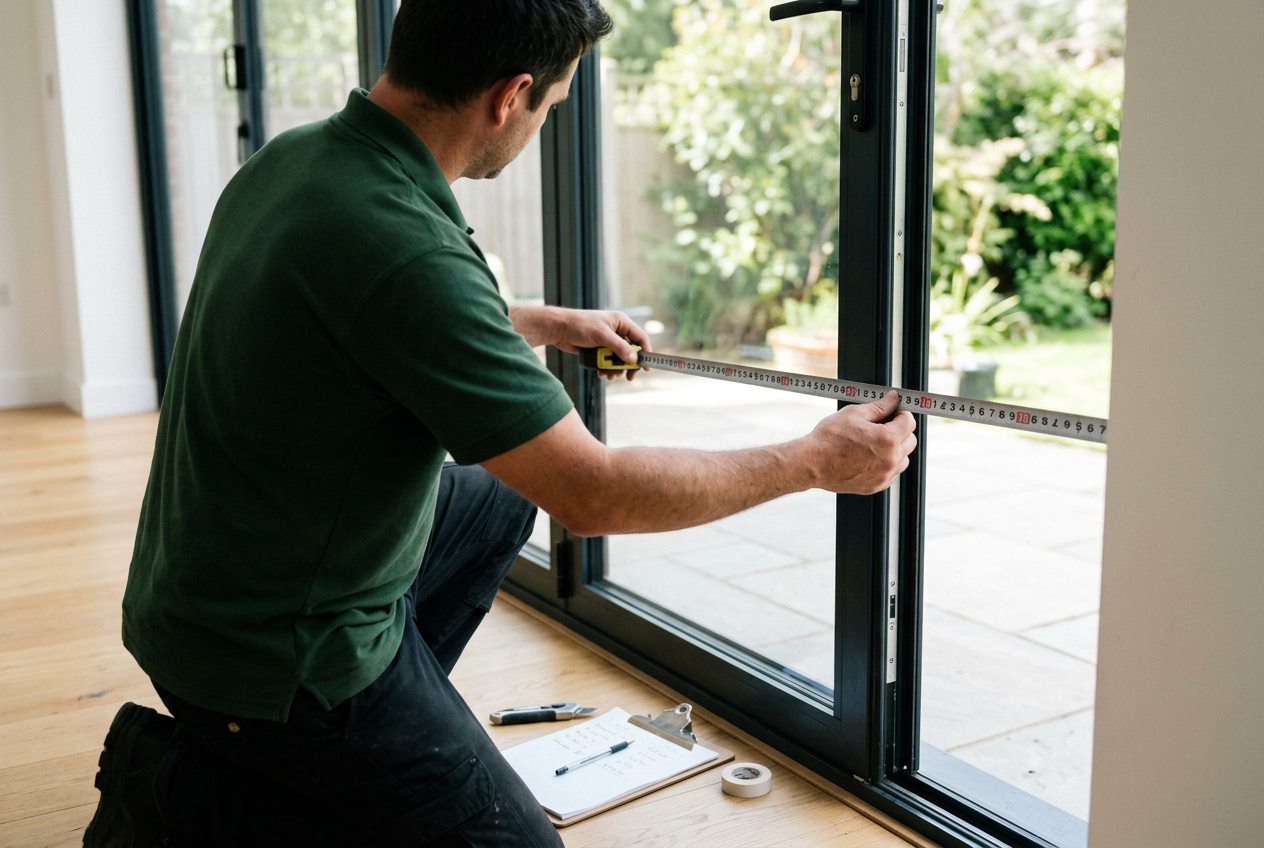
The channels and headbox have to be fixed into something solid: masonry, a steel post or a timber post or beam with enough depth to hold a screw. A blind fixed into thin cladding or a lightweight pergola will not perform like the one in the brochure. At the measure we check what each channel will fix into, and tell you if a post or extra blocking is needed.
Down and locked, or all the way up
Ratings assume the bottom rail is fully down and locked. A blind left halfway down, or down but unlocked, catches wind like a sail and is far more likely to be damaged. If you want shade partway down on a windy day, choose a fabric that lets air through.
Fabric choice changes the wind load
The fabric you choose decides how much of the wind actually reaches the blind's frame and fixings. Here is how the three common types compare.
Mesh sunscreen
Clear PVC
Blockout canvas
In wind
Some air passes through, so it carries the least load
Stops the wind, so it carries the full load
Stops the wind, so it carries the full load
View out
Good by day, depending on the weave
Clear, like a window
None
Rain
Slows light rain but is not waterproof
Keeps most rain out
Keeps most rain out
Sun and glare
Cuts glare and much of the heat
Lets the sun straight through
Blocks the sun completely
Best for
West-facing patios and everyday shade
Winter evenings and shelter from wind and rain
Privacy and closing off one side
Many families mix them: mesh on the sunny western side for the afternoons, and clear PVC on the side that faces the prevailing wind, so the alfresco works in winter as well as summer. Clear PVC needs a little more care than mesh. Roll it up only when it is dry and clean, and wash it with fresh water and a soft cloth, never a scourer or solvent.
Storms, sensors and everyday habits
Storm season on the Gold Coast runs roughly from late spring to early autumn, and storm fronts often arrive in the afternoon with a sudden squall ahead of the rain. That is exactly when the blinds are likely to be down for shade.
When to raise them
A storm is forecast or a dark front is coming
Raise every blind fully before the wind arrives. Do not wait for the first gust.
Gusty all day
Mesh blinds can usually stay down and locked. Raise clear PVC and blockout blinds, which catch more wind.
Going out or away
Leave the blinds up, unless they are motorised with a wind sensor that is switched on.
A severe weather or cyclone warning
Raise all blinds and follow official advice for preparing your home.
If the blinds are motorised, a wind sensor near the patio can raise them automatically when gusts pass a set level. It is worth having if the house is often empty in the afternoon or the blinds are hard to reach. A sensor needs a clear spot to read the wind, so we choose its position at the measure rather than on install day.
After a blow, check that each zip is still seated in its channel. If one has come out, raise the blind and lower it slowly so the zip feeds back in. If the fabric is creased or a zip has torn, call us rather than forcing it.
Cost and what to expect
As a guide, a zip track outdoor blind is typically $1,400 to $3,200 per blind, supplied and installed. Size, fabric, crank or motor, and how the channels are fixed all move the price. Motors and wind sensors add to the cost, and our blinds motors carry a 2 year warranty.
At the free measure we look at which way each side faces, where the wind comes from and what the channels will fix into, then quote each opening separately so you can see what every blind costs.
Outdoor blinds
Zip track blinds, measured for your patio
We bring mesh, clear and blockout fabric samples to the free measure and check each opening for wind exposure and fixing before we quote.
Explore zip track outdoor blindsQuestions
Can zip track blinds stay down overnight?
In calm weather, yes, as long as they are fully down and locked. If wind or a storm is forecast, raise them before you go to bed, or use a motorised blind with a wind sensor.
Will a zip track blind keep the rain out?
Clear PVC and blockout fabrics keep most rain out when they are down and locked, although heavy wind-driven rain can still wet the floor near the edges. Mesh slows light rain but is not waterproof.
Can I motorise my blinds later?
Often, yes, if the headbox has room for a motor and there is power nearby. It is simpler, and usually cheaper, to plan for it at the start so a licensed electrician can put a power point near the headbox.
Do zip track blinds need servicing?
Very little. Rinse the fabric and channels with fresh water every few months, more often near the water, and keep leaves and grit out of the bottom of the channels so the zip runs freely.
MH
About the author
Mitch Harlow
Founder and lead installer, Secure Blinds & Screens
Measures and fits zip track and outdoor blinds on patios from Ormeau to Southport, and checks every opening for wind exposure and fixing before he quotes.
More guides from this authorRelated services.
The pages that go deeper on the products in this guide, with options, specifications and recent projects.
Keep reading.
More plain-English guides to choosing and looking after screens and blinds on the Gold Coast.
All advice
Want the patio back in the afternoon?
Book a free measure. We bring fabric samples, check each opening for wind and fixing, and send a written quote within two business days.
Book a free measureNo obligation · Free measure from Ormeau to Southport