Child-safe window screens and the NCC openable-window rules
Falls from windows are a real risk for young children, and the National Construction Code has rules for them in new homes. Here is what those rules say in plain English, how a security screen can meet them and what to check before you buy.
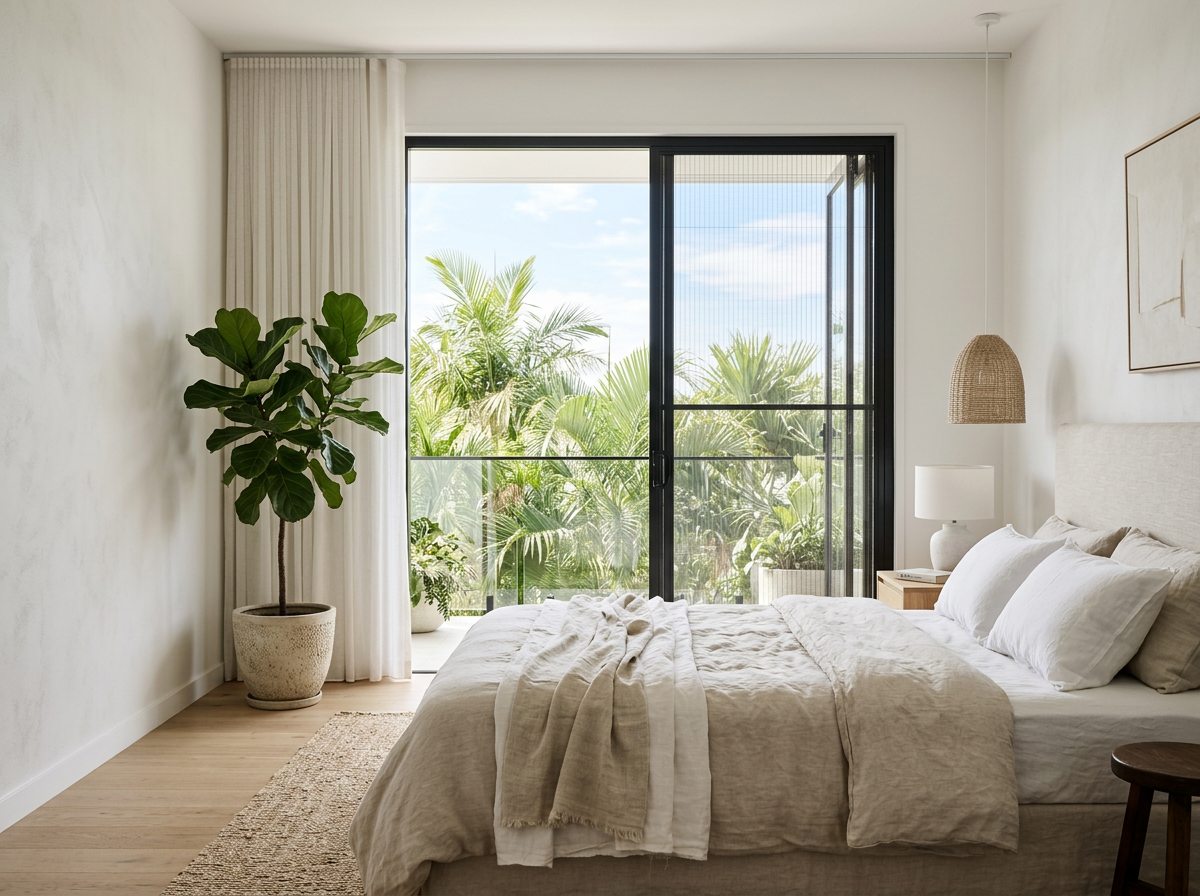
An upstairs bedroom with a black-framed security window screen, so the window can open fully for the breeze.
On this page
Key takeaways
In new homes, the NCC calls for protection on openable bedroom windows where the floor is 2 metres or more above the ground outside and the window opening is less than 1.7 metres above the floor.
In other rooms, protection is needed where the floor is 4 metres or more above the ground outside and the window opening is less than 865 mm above the floor.
For bedrooms, a restrictor or a screen with secure fittings can be used. Either must stop a 125 mm sphere passing through and resist an outward force of 250 N.
A standard fly screen is not designed to stop a child. A correctly specified security screen can protect the window while letting it open fully.
Your builder or certifier confirms what applies to your home. Existing homes do not have to be upgraded, but the same rules are a sensible guide.
Why window falls matter
Every year young children are hurt in falls from windows and balconies, and most of those falls happen at home. Children under five are most at risk. They climb before they understand height, and to them a fly screen looks solid, even though it can pop out with a little pressure.
That is why the National Construction Code (NCC) includes rules for openable windows in new homes. They have been part of the code since 2013 and now sit in the NCC housing provisions that apply to new homes in Queensland.
What the NCC rules say
The rules apply to new building work, such as a new home, an extension or a new window in a renovation. In simplified terms, there are two situations.
Bedroom windows
A bedroom window needs protection when the floor of the room is 2 metres or more above the surface below the window outside, and the lowest part of the window opening is less than 1.7 metres above the bedroom floor. In practice, that covers most openable windows in upstairs bedrooms, and some ground-floor bedrooms on sloping blocks.
Other rooms
For rooms other than bedrooms, the trigger is higher. Protection is needed when the floor is 4 metres or more above the surface below, and the lowest part of the window opening is less than 865 mm above the floor. Here the protection works as a barrier at least 865 mm high: it must not let a 125 mm sphere pass through, and it must not have rails or footholds between 150 mm and 760 mm above the floor that a child could climb.
Bedroom windows
Other rooms
Floor height above the ground outside
2 metres or more
4 metres or more
Window opening that triggers the rule
Lowest part less than 1.7 metres above the floor
Lowest part less than 865 mm above the floor
What is needed
A restrictor or a screen with secure fittings
A barrier at least 865 mm above the floor
Key tests
Stops a 125 mm sphere and resists 250 N outward
Stops a 125 mm sphere, with no climbable elements from 150 to 760 mm
These are simplified summaries. The exact wording, how each height is measured and any exceptions are set out in the NCC, so ask your builder or building certifier what applies to a particular window.
Restrictor or screen: the two ways to comply
For bedroom windows, the code allows two approaches. The first is a device that limits how far the window opens, such as a restrictor on an awning window's winder or a stop on a sliding sash. The second is a screen with secure fittings that covers the openable part of the window.
Either way, the device or screen must pass the same tests. It must not let a 125 mm sphere pass through the opening or the screen, it must resist an outward horizontal force of 250 newtons, and if it can be removed, unlocked or overridden, its release must be child resistant.
Why restrictors are common
Restrictors are cheap and simple, so many builders use them. The catch is that a window held to a gap of less than 125 mm lets in very little breeze. On hot nights, owners often override them, which removes the protection completely.
Why a screen is often the better answer
A screen that meets the requirements lets the window open all the way, so you get the full breeze through the room and the protection stays in place. A security screen built to AS 5039 has been tested against far tougher attacks than a child leaning on it, and its frame is fixed so it cannot simply be pushed out of the opening.
Why a fly screen is not enough
A standard fly screen is made to keep insects out. Its fibreglass or aluminium mesh tears easily, and the frame is held in by small clips or springs so it can be removed for cleaning. A child pushing or leaning against it can push it straight out of the window. Fly screens are not designed to stop a fall and should never be relied on to do so.
Balancing safety and escape
A bedroom window can also be a second way out in a fire. Where that matters, an emergency escape screen can be opened from inside without a key, using a release designed to be hard for a small child to operate. Make sure every adult and older child in the house knows how it works.
Older homes, renovations and rentals
The NCC applies to new building work, so an older home does not have to add protection to the windows it already has. If you replace or add a window as part of a renovation, the new window may need to comply, so check with your builder or certifier before you order.
Even where it is not required, the NCC rules are a sensible standard for any home with young children. Kidsafe also recommends keeping beds, cots and furniture away from windows so children cannot climb up to them, and supervising children near open windows and balconies.
Checks to make at home
Upstairs bedrooms
Measure from the floor to the bottom of the window opening. If it is less than 1.7 metres, plan for a restrictor or a compliant screen.
Rooms over a big drop
On a high floor or a steep block, check any window that opens less than 865 mm above the floor.
Stair landings and voids
Low windows on landings are easy to overlook and easy for a child to reach.
Furniture
Keep beds, cots, couches and toy boxes away from windows, whatever is fitted.
Window screens
Child-safe screens that let the window open fully
Our child-safe window screens are measured for each window and fixed so they cannot be pushed out. Where the NCC applies, we give your builder or certifier the product details they need.
Explore child-safe window screensCost and what to expect
As a guide, an openable or child-safe window screen is typically $380 to $750 per window, supplied and installed, depending on the size, the mesh and the type of window. A fixed security screen, which suits sliding windows that open behind it, is typically $290 to $620 per window.
Questions
Does a security screen meet the NCC openable-window rules?
It can, if it is specified and fixed correctly for that window: no gap a 125 mm sphere can pass through, able to resist 250 N outward, and a child-resistant release if it can be opened or removed. For a new home, your builder or certifier confirms compliance.
Are window restrictors enough?
They can comply, but a window limited to a gap under 125 mm lets in very little air. Many families prefer a screen so the window can open fully.
Do the rules apply to my existing home?
Not retrospectively. They apply to new building work. If you are replacing or adding windows, ask your builder or certifier whether the new ones need protection.
Can a child-safe screen still be an emergency exit?
Yes. An emergency escape screen opens from inside without a key, with a release designed to be hard for small children to use. We show everyone in the house how it works on install day.
MH
About the author
Mitch Harlow
Founder and lead installer, Secure Blinds & Screens
Fits child-safe and emergency escape window screens in family homes across the northern Gold Coast, and works with builders and certifiers on new homes.
More guides from this authorRelated services.
The pages that go deeper on the products in this guide, with options, specifications and recent projects.
Keep reading.
More plain-English guides to choosing and looking after security screens on the Gold Coast.
All advice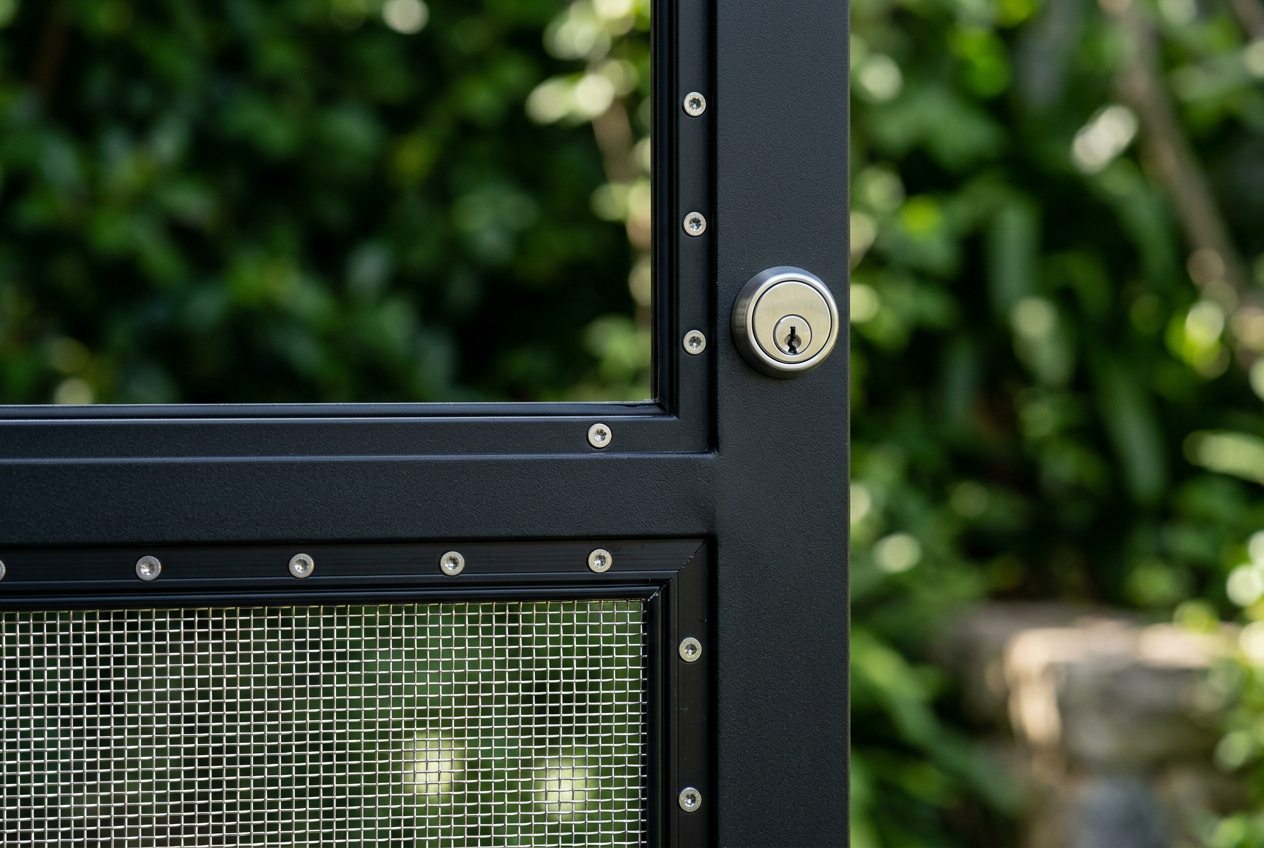
Want the upstairs windows open again?
Book a free measure. We check every window, measure the sill heights and send a written quote within two business days.
Book a free measureNo obligation · Free measure from Ormeau to Southport